

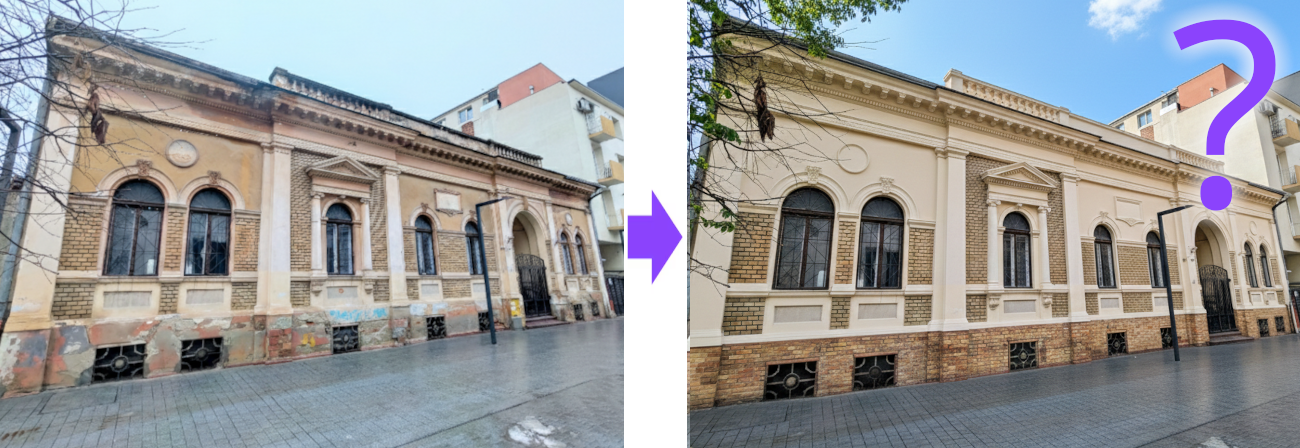
Industrial Legacy and Religious Center: The Metamorphosis of the Pollák Building in Cluj
The history of the edifice located at 25 Tipografiei Street in Cluj-Napoca serves as more than a mere chronicle of a single building; it represents a faithful imprint of the city’s industrialization process, the internal stratification of the local Jewish community, and the radical economic and political transformations of the 20th century.
Early History and the Pollák Era
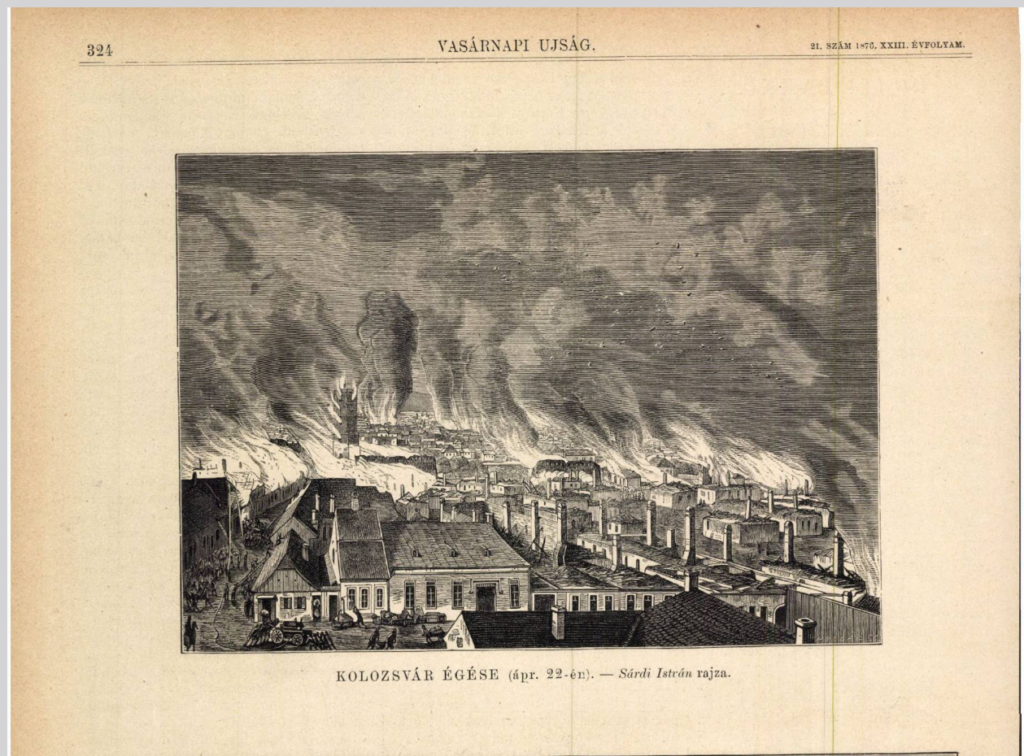
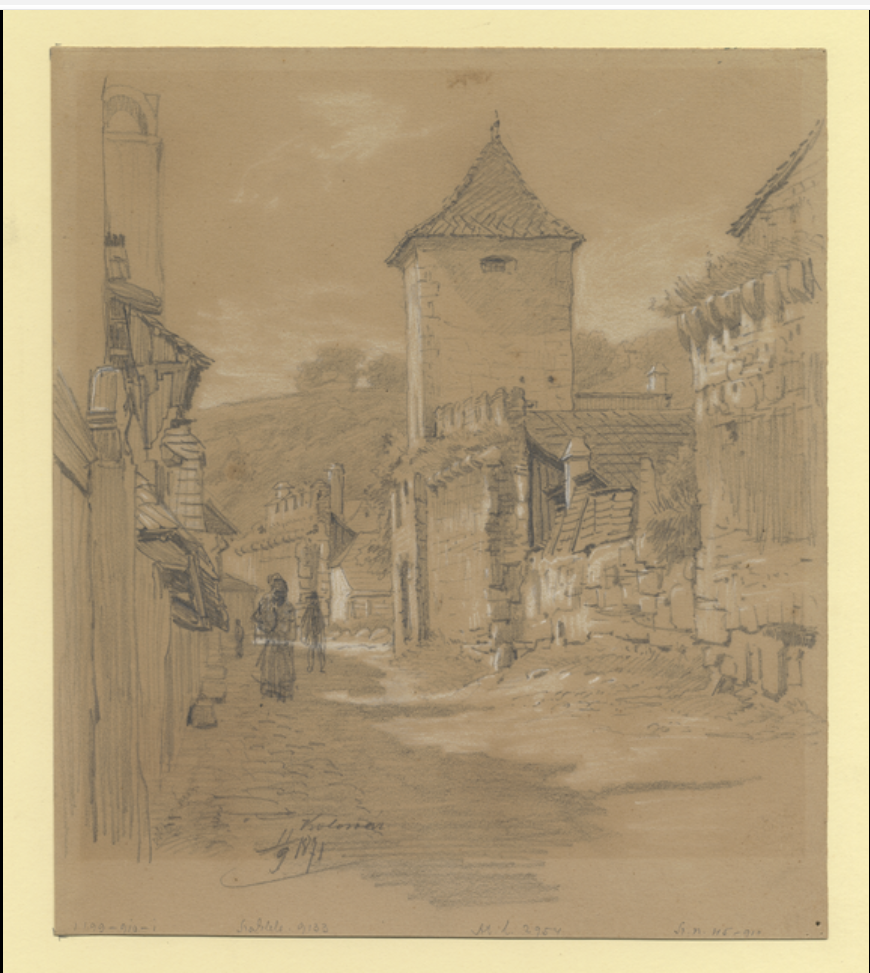
In the first half of the 19th century, according to a map dated 1831, the terrain along the fortress walls remained undeveloped. The area was registered as a large, vacant plot designated as number 80. At that time, the city’s defensive wall, connected to a fortification tower, was still visible from the street.1 The development of the plot dates to the mid-19th century; by 1869, the property appeared in registers at 4 Soap Street along the Stone Wall (Kőfalsori Szappan utca),2 with Sámuel Bálint listed as the owner.3 In 1876, the district known as “Soap Town” fell victim to a devastating fire that affected the entire street.4
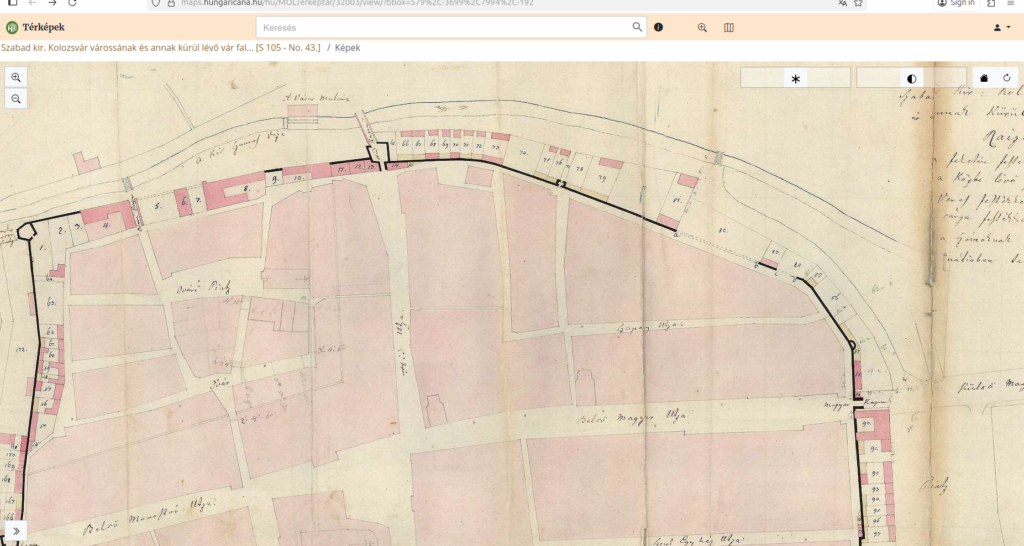
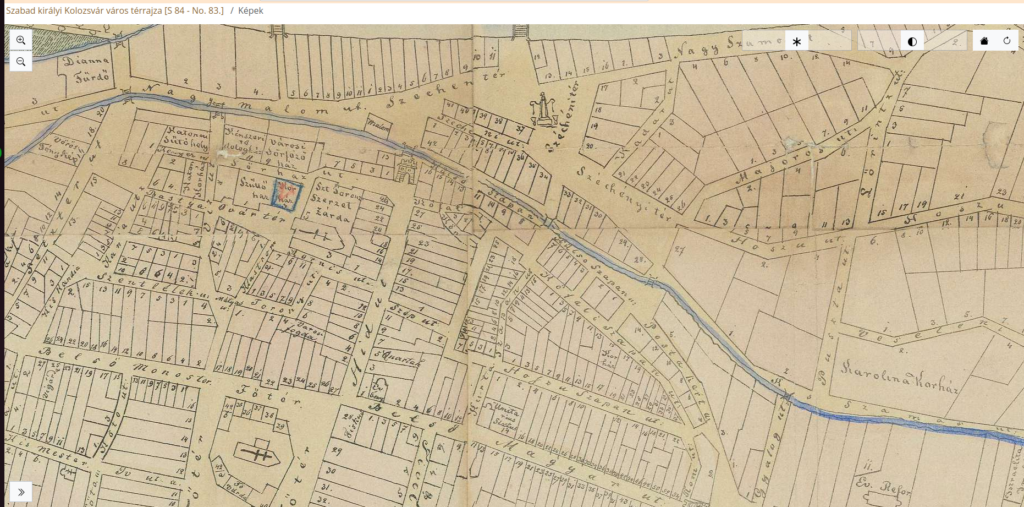
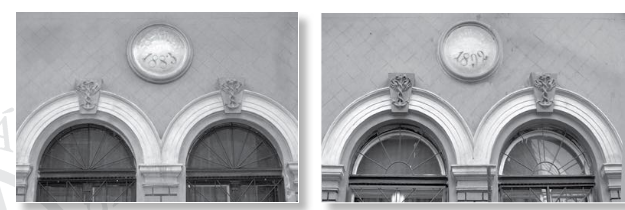
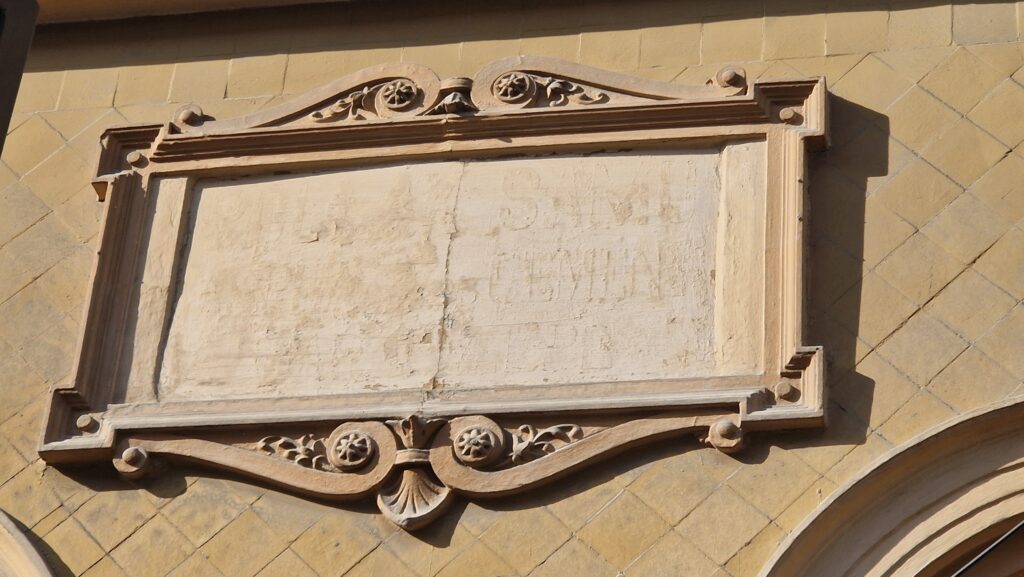
A defining stage in the building’s existence was its ownership by Sámuel Pollák, a cement manufacturer and asphalt contractor. Pollák founded his company in 1883—a date formerly visible on the building’s facade. His enterprise operated at 4 Soap Street along the Stone Wall, which served as the industrial base for his asphalt and cement factory.5 Pollák was a prominent figure in the industrial class of Cluj, also founding a water and sewerage company6 and actively participating in public works tenders.7 The legacy of his craftsmanship is preserved to this day through small identification plates visible on the enclosures of numerous funerary monuments in the Hajongard Cemetery.
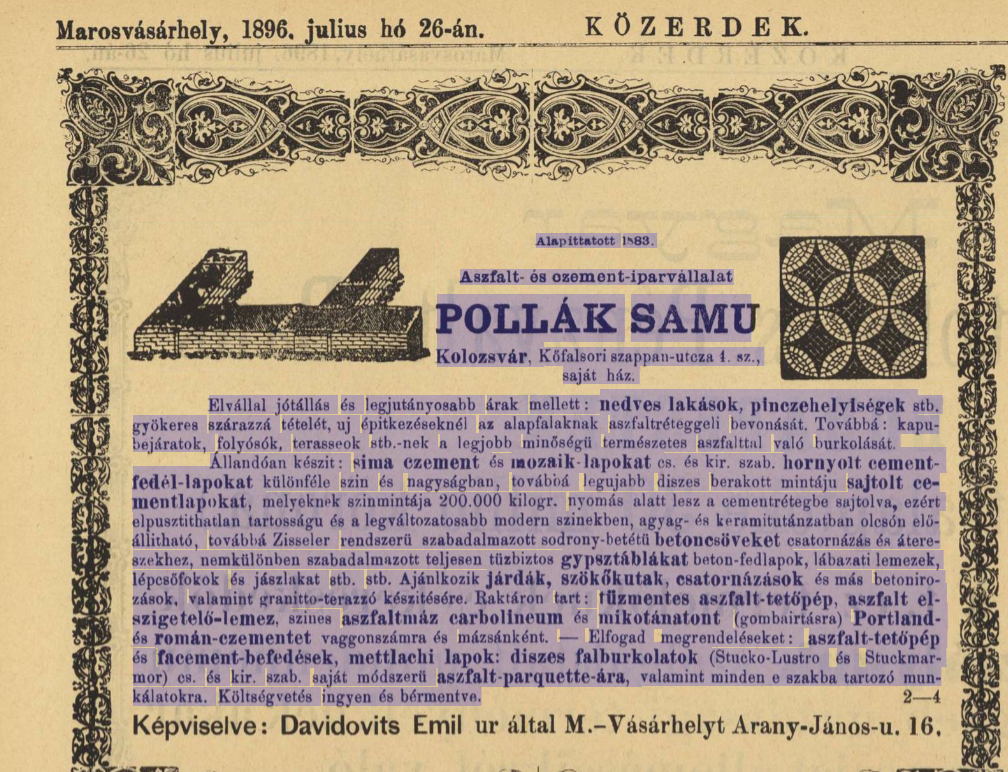
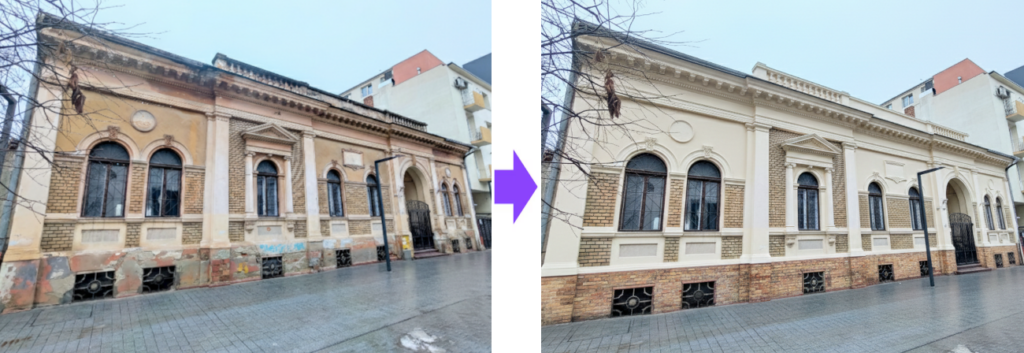
The edifice visible today was constructed by Pollák and completed in 1892, another date historically marked on the facade. These factual data points refute entries in Albert Zsolt Jakab’s commemorative plaque database, which suggested the years on the facade were linked to the religious community.8 On the 1894 cadastral map, the newly built house is already represented.9 It served not only as the corporate headquarters but also as the family residence, evidenced by the fact that both Pollák’s mother (September 1900)10 and father (March 1901)11 were interred from this location.
The Pollák era concluded in the early 20th century. Due to a lack of primary sources, the exact circumstances remain partially obscured. However, the Nemzeti Hírlap newspaper reported a protest by the company’s 130 workers on August 16, 1904.12 While the resolution of this conflict is undocumented, such tensions likely necessitated the alienation of the property. By 1910, the family no longer appeared at this address.
Institutional Diversification of the Cluj Jewish Communities
Understanding the building’s subsequent role requires an analysis of the development of the Cluj Jewish community in the 19th century, characterized by institutional expansion and diversification. By the turn of the century, the community represented over 11% of the city’s population.13 The initially unified Orthodox community inaugurated its first synagogue in 1851, alongside housing for teachers, the rabbi, and the shochet (ritual slaughterer).14
Internal segmentation was finalized following the 1868 Israelite Congress. In Cluj, the schism occurred in stages. The highly conservative Hasidic group separated in 1875, establishing the Beth Avrohom prayer house. For a long period, they lacked a permanent building, holding services in rented spaces or the Central Park Pavilion before constructing their own synagogue on Morii Street.15
In 1881, a group representing the upper bourgeoisie and intelligentsia broke away from Orthodoxy, initially operating under the Status Quo Ante orientation, and from 1884 as a Neolog community. Their Moorish-Classicist temple on Ferenc József Street (now Horea Street) was inaugurated in 1886.16
Conversely, the Orthodox group maintained its continuity, with statutes approved in 1872.17 They opened primary schools for boys (1875) and girls (1908),18 and expanded their 1851 synagogue in 1896.19 However, a separate community office for the community is not mentioned in sources until the 1920s.
The Jewish Community’s Patrimony: The Role of the Tipografiei Street property
While the direct mechanism by which the property left the Pollák family’s possession remains unverified, the land register extract shows that on January 9, 1908, a mortgage of 98,992 crowns was instituted in favor of the Beocsini Cementgyár Unio Redlich Ohrenstein și Spitzer firm from Budapest. In 1918, this mortgage was transferred to Eduard Spitzer.20
Subsequently, the property entered the ownership of the Autonomous Orthodox Israelite Community of Cluj. The building fulfilled complex functions: the brick and tile structure housed workshops, kitchens, and rooms in the basement, while the ground floor functioned as a ritual slaughterhouse (abattoir) and a council hall probably for general assemblies. The complex also included a bakery and numerous residential quarters.21
The economic crisis of the 1920s and 1930s placed the community in a precarious financial state. Between 1928 and 1929, the community accumulated massive debts, with its real estate assets burdened by mortgages exceeding 9 million lei. This debt cycle was dominated by Banca Românească and the General Savings Bank of Sibiu. By 1931, secondary mortgages were registered in favor of various entities, including the Cluj City Hall and numerous prominent local Jewish figures acting as creditors: Akiba Glasner, Fried Lázár, Lövi Maurițiu, Löflen Wilhelm, Ipsipovits Simion, Rosenfeld Mihail, Herman Iudig, Somogyi Elisa, Glasner Samuil, Weisz Filip, Szabo Mendel, Weil Iacob, Weisz Izidor, Abraham Segal, Buxbaum Benjamin, Binder Márkusz, Bihari Árpád, Rosenberg Margareta, Rosenberg Vârvara, Bernat Serena, Hönig Rozália, Hartman Berta, Fux Chezkel, Aron Samuil, Goldner Iaszna, Samuil Eugen și Iosipovici Simion.22
Due to arrears, the property entered forced execution in 1932. Despite a court-ordered auction and significant debts to utility providers like the Cluj Waterworks, the community managed to retain the building. In 1934, they sought “debt relief benefits” (a payment moratorium) under Romanian debtor protection laws. In 1938, the property was re-registered under the community’s name following a consolidation procedure. Remarkably, these decades-old financial encumbrances were only officially cleared from the land registry in 1986.23
Nationalization and Post-War Fate
The destiny of the building evolved in tandem with shifting political regimes. In 1941, under Hungarian administration, the property was taken over by the city of Cluj. In 1950, following the war, ownership returned to the Jewish community, now under the unified name of the Community of Mosaic Jews of Cluj. In 1951, through a “donation contract”—a common mask for nationalization in the early Communist era—the ownership structure changed again.24
In 1961, the property was partitioned: the portion corresponding to 32-36 Dubălarilor Street was registered to the Romanian State, while the house and courtyard at 25 Gutenberg Street (now Tipografiei) remained in the community’s possession. This partition documents an era where central city plots were divided and partially nationalized. As a final act in its modern history, the land registry data was transcribed into the digital records system in 2015, formalizing the tumultuous chronicle of this landmark.25
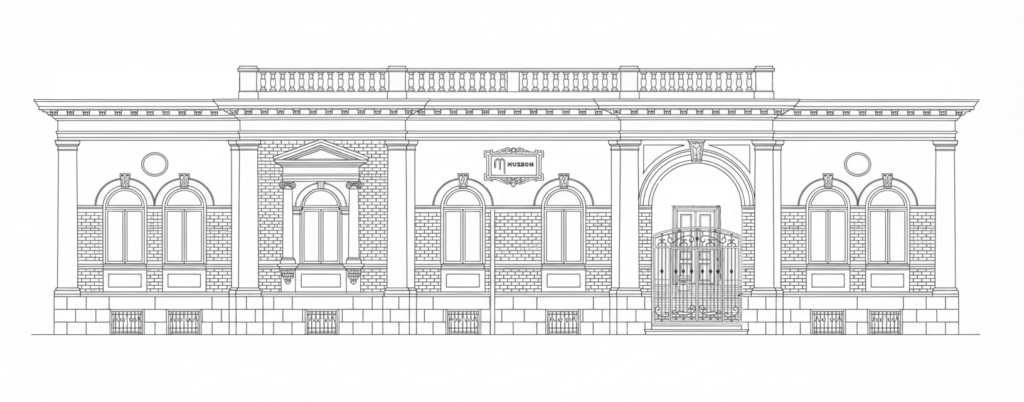
Starting from February 2026, the Muzeon Association shall acquire, through a loan-for-use agreement (commodatum), the right to use the building free of charge, under the condition of its renovation and the establishment of a joint museum complex. This complex will comprise the well-known Muzeon narrative exhibition, the ‘Contribution of the Jewish Community of Cluj to Cluj Society’ exhibition, and a hall for temporary exhibitions and educational activities, all integrated into a unified museum complex operated by Muzeon.
Sources
- Bodanyi, Sandor. Szabad kiralyi Kolozsvar varos hazbirtokosainak nevsora [List of House Owners in the Royal Free City of Cluj]. Kolozsvar: Keresztesy, 1869. Austrian National Library, ÖNB Digital. https://viewer.onb.ac.at/108F99E8.
- Bürger, Franciscus. Szabad kir. Kolozsvár várossának és annak körül lévő vár falainak rajzolatja [Design of the Royal Free City of Cluj and Its Surrounding Fortress Walls]. Topographic map. 1831. National Archives of Hungary, S 105 – No. 43. Hungaricana Public Collections Portal. https://maps.hungaricana.hu/hu/MOLTerkeptar/32003/.
- Carmilly-Weinberger, Moshe, ed. A kolozsvári zsidóság emlékkönyve [Memorial Volume for the Jews of Cluj-Kolozsvar]. New York: Sepher-Hermon Press, 1988.
- “Gyászrovat” [Obituaries]. Magyar Polgár 23, no. 201 (September 3, 1900): 8.
- “Gyászrovat” [Obituaries]. Magyar Polgár 24, no. 51 (March 2, 1901): 7.
- Oficiul de Cadastru și Publicitate Imobiliară Cluj (OCPI Cluj). Extras de Carte Funciară in extenso, Localitatea Cluj-Napoca, Nr. CF 6006, CFE 313190 [Land Registry Extract in extenso, Cluj-Napoca, No. CF 6006, CFE 313190].
- Országos Széchényi Könyvtár. Kolozsvár szab. kir. város [Royal Free City of Cluj]. Manuscript cadastral map. Reference: TK 404. Scale [1:1000]. [1894]. OSZK manuscript maps, Hungaricana. https://maps.hungaricana.hu/hu/OSZKTerkeptar/101/. [The dating in the Hungaricana database is incorrect; see: Bartos-Elekes, Zsombor. “Kolozsvár régi kataszteri térképei és georeferált közzétételük” (The Old Cadastral Maps of Cluj and Their Georeferenced Publication). Catastrum 2, no. 3 (2015): 3–17.]
- “Pollák és Clauser vízvezeték-, csatornázás és szivattyú-szerelő vállalata Kolozsvárt” [Pollák and Clauser’s Waterworks, Sewerage and Pump Installation Enterprise in Cluj]. Központi Értesítő 23, no. 1 (1898): 432.
- “Pollák Samu aszfalt- és czement-iparvállalata” [Samu Pollák’s Asphalt and Cement Industry Enterprise]. Közérdek (Târgu Mureș), July 26, 1896, 5.
- Sándor Bodányi. Szabad királyi Kolozsvár város térrajza [Map of the Royal Free City of Cluj]. Town map. 1869. National Archives of Hungary, S 84 – No. 83. Hungaricana Public Collections Portal. https://maps.hungaricana.hu/hu/MOLTerkeptar/30203/.
- Sárdi, István. “Kolozsvár égése (ápr. 22-én)” [The Great Fire of Cluj (April 22)]. Vasárnapi Ujság 23, no. 21 (May 21, 1876): 324.
- “Sztájkoló cement- és betonmunkások” [Cement and Concrete Workers on Strike]. Nemzeti Hirlap 1, no. 112 (August 16, 1904): 3.
- “Vízvezetéki építmények árlejtése” [Tender for Waterworks Construction]. Ellenzék 21, no. 198 (September 1, 1900): 3.
Bibliography
- Albert Zsolt Jakab. Ez a kő tétetett… Az emlékezet helyei Kolozsváron (1440–2023). Adattár [This Stone Was Set… Sites of Memory in Cluj (1440–2023). Database]. Cluj-Napoca: Kriza János Ethnographic Society Publishing House, 2023. http://www.kjnt.ro/szovegtar.
- Gidó, Attila. Két évtized. Kolozsvári zsidók a két világháború között [Two Decades. The Jews of Cluj Between the Two World Wars]. 2nd edition. Cluj-Napoca: Transylvanian Museum Society, 2016.
- Gidó, Attila. “Viața instituțională a comunității evreiești din Cluj” [The Institutional Life of the Jewish Community in Cluj]. In File din istoria evreimii clujene [Pages from the History of the Jews of Cluj], edited by Andrea Ghiță, Dragoș Sdrobiș, and Andrei Zador, 21–52. Cluj-Napoca: Mega Publishing House, 2016.
- Gyémánt, Ladislau. “Începuturile vieții evreiești la Cluj” [The Beginnings of Jewish Life in Cluj]. In File din istoria evreimii clujene [Pages from the History of the Jews of Cluj], edited by Andrea Ghiță, Dragoș Sdrobiș, and Andrei Zador, 11–20. Cluj-Napoca: Mega Publishing House, 2016.
- Lőwy, Dániel. A téglagyártól a tehervonatig: Kolozsvár zsidó lakosságának története [From the Brick Factory to the Freight Train: The History of the Jewish Population in Cluj]. Cluj-Napoca: Erdélyi Szépmíves Céh, 1998.
Footnotes
1Franciscus Bürger, Design of the Royal Free City of Cluj and Its Surrounding Fortress Walls [Szabad kir. Kolozsvár várossának és annak körül lévő vár falainak rajzolatja], topographic map, 1831, National Archives of Hungary, S 105 – No. 43, Hungaricana Public Collections Portal, https://maps.hungaricana.hu/hu/MOLTerkeptar/32003/.
2Sándor Bodányi, Map of the Royal Free City of Cluj [Szabad királyi Kolozsvár város térrajza], town map, 1869, National Archives of Hungary, S 84 – No. 83, Hungaricana Public Collections Portal, https://maps.hungaricana.hu/hu/MOLTerkeptar/30203/.
3Bodanyi, Sandor. List of House Owners in the Royal Free City of Cluj [Szabad kiralyi Kolozsvar varos hazbirtokosainak nevsora]. Kolozsvar: Keresztesy, 1869. Austrian National Library, ÖNB Digital. 31. (https://viewer.onb.ac.at/108F99E8)
4Sárdi, István. “The Great Fire of Cluj (April 22)” [Kolozsvár égése (ápr. 22-én)]. Vasárnapi Ujság 23, no. 21 (May 21, 1876): 324.
5“Samu Pollák’s Asphalt and Cement Industry Enterprise” [Pollák Samu aszfalt- és czement-iparvállalata]. Közérdek (Târgu Mureș), July 26, 1896, 5.
6“Pollák and Clauser’s Waterworks, Sewerage and Pump Installation Enterprise in Cluj” [Pollák és Clauser vízvezeték-, csatornázás és szivattyú-szerelő vállalata Kolozsvárt]. Központi Értesítő 23, no. 1 (1898): 432.
7“Tender for Waterworks Construction” [Vízvezetéki építmények árlejtése]. Ellenzék 21, no. 198 (September 1, 1900): 3.
8Albert Zsolt Jakab, This Stone Was Set… Sites of Memory in Cluj (1440–2023). Database [Ez a kő tétetett… Az emlékezet helyei Kolozsváron (1440–2023). Adattár] (Cluj-Napoca: Kriza János Ethnographic Society Publishing House, 2023), 189, http://www.kjnt.ro/szovegtar.
9National Széchényi Library. Royal Free City of Cluj [Manuscript Cadastral Map] [Kolozsvár szab. kir. város]. Reference: TK 404. Scale [1:1000]. [1894]. OSZK manuscript maps, Hungaricana. https://maps.hungaricana.hu/hu/OSZKTerkeptar/101/. Regarding the incorrect dating in the Hungaricana database, see: Bartos-Elekes, Zsombor. “The Old Cadastral Maps of Cluj and Their Georeferenced Publication” [Kolozsvár régi kataszteri térképei és georeferált közzétételük]. Catastrum 2, no. 3 (2015): 4. Accessed March 10, 2026. http://epa.oszk.hu/01300/01359/00007/pdf/EPA01359_catastrum_2015_03_03-17.pdf.
10“Obituaries” [Gyászrovat]. Magyar Polgár 23, no. 201 (September 3, 1900): 8.
11“Obituaries” [Gyászrovat]. Magyar Polgár 24, no. 51 (March 2, 1901): 7.
12“Cement and Concrete Workers on Strike” [Sztájkoló cement- és betonmunkások]. Nemzeti Hirlap 1, no. 112 (August 16, 1904): 3.
13Ladislau Gyémánt, “The Beginnings of Jewish Life in Cluj” [Începuturile vieții evreiești la Cluj], in Pages from the History of the Jews of Cluj [File din istoria evreimii clujene], eds. Andrea Ghiță, Dragoș Sdrobiș, and Andrei Zador (Cluj-Napoca: Mega Publishing House, 2016), 16.
14Dániel Lőwy, From the Brick Factory to the Freight Train: The History of the Jewish Population in Cluj [A téglagyártól a tehervonatig: Kolozsvár zsidó lakosságának története] (Cluj-Napoca: Erdélyi Szépmíves Céh, 1998), 25.
15Attila Gidó, “The Institutional Life of the Jewish Community in Cluj” [Viața instituțională a comunității evreiești din Cluj], in Pages from the History of the Jews of Cluj [File din istoria evreimii clujene], eds. Andrea Ghiță, Dragoș Sdrobiș, and Andrei Zador (Cluj-Napoca: Mega Publishing House, 2011), 24; see also Lőwy, From the Brick Factory to the Freight Train, 27.
16Gidó, “The Institutional Life of the Jewish Community,” 24; cf. Lőwy, From the Brick Factory to the Freight Train, 27; see also Moshe Carmilly-Weinberger, ed., Memorial Volume for the Jews of Cluj-Kolozsvar [A kolozsvári zsidóság emlékkönyve] (New York: Sepher-Hermon Press, 1988), 56.
17Gidó, Attila. Two Decades. The Jews of Cluj Between the Two World Wars [Két évtized. Kolozsvári zsidók a két világháború között]. 2nd edition. Cluj-Napoca: Transylvanian Museum Society, 2016. 35.
18Gidó, “The Institutional Life of the Jewish Community,” 24;
19Lőwy, From the Brick Factory to the Freight Train, 27;
20Cluj Office of Cadastre and Real Estate Advertising (OCPI Cluj). Land Registry Extract in extenso, Cluj-Napoca, No. CF 6006, CFE 313190. Part C.
21Ibid. Part A.
22Ibid. Part C.
23Ibid.
24Ibid. Part B.
25Ibid.